- 2026-03-23 10:31:13
- Moses G. Geply

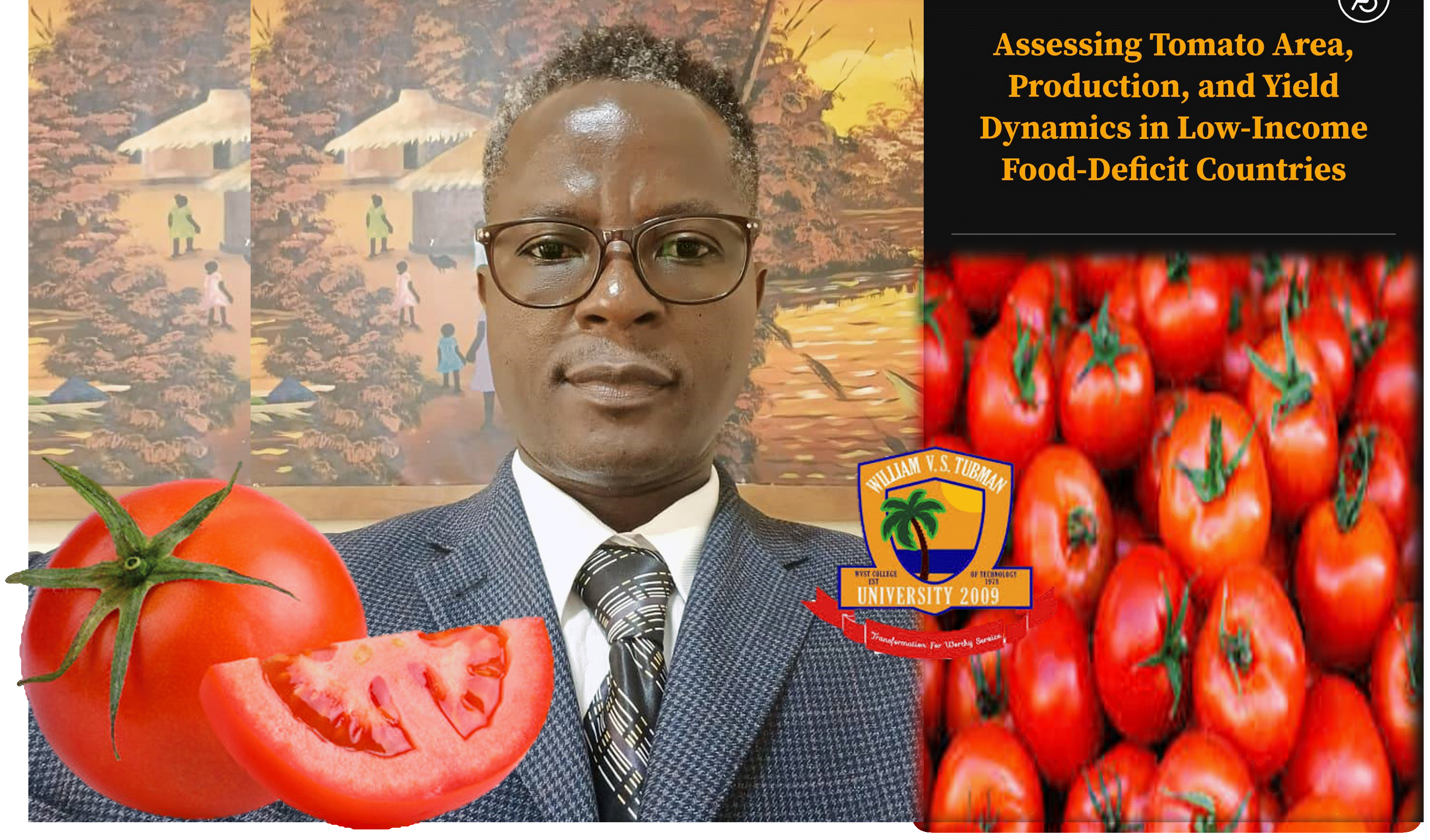
WVSTU: A new international study on tomato production is drawing attention to agricultural challenges faced by countries like Liberia, with a Tubman University scholar playing a key role in the research.
Francis Kloh Fukah, Acting Dean of the College of Arts and Sciences at Tubman University and a PhD candidate at the Sokoine University of Agriculture in Tanzania co-authored the study.
The research, published in the East African Journal of Agriculture and Biotechnology, was conducted alongside Aneth Japhet Magubika, Upendo Lufingo Msalilwa, Festo Richard Silungwe, and Eliakira Kisetu Nassary.
Covering 37 low-income food-deficit countries from 2000 to 2022, the study finds that tomato production systems in many nations, Liberia included, are constrained by structural challenges. These include low soil fertility, limited access to improved seeds and fertilizers, pests and diseases, and the growing impact of climate change.
A key takeaway from the research is that increasing the size of farmland does not necessarily translate into higher yields. For countries like Liberia, the study suggests that productivity gains will depend more on improving farming practices than on expanding cultivated land.
The authors recommend climate-smart agriculture, better input access, and targeted pest management as practical solutions to stabilize yields and improve food security outcomes.
The study also compares performance across countries, noting that Cameroon leads in cultivated areas but underperforms in yield, while the Syrian Arab Republic maintains consistently high productivity. Tanzania, where Fukah is currently studying, shows fluctuating yields despite relatively strong output.
By linking global data to real-world challenges, the research provides important lessons for Liberia's agricultural sector. Fukah's involvement highlights Tubman University's growing contribution to international research





© WILLIAM V.S. TUBMAN UNIVERSITY